

Upcoming ECHO Community Meet-Up
Towards Social Justice in AI
This afternoon brings together ECHO ambassadors working across sectors — policy, education, business, community organizing, etc. — to explore the current developments in AI, what this means for social justice, and what people like us can actually do about it.
The programme includes speakers that will take us through the most important developments and challenges in AI, followed by collaborative sessions to develop concrete approaches for your field, organization and personal praxis.
Whether you work in tech or not, these systems are already affecting your work and lives. Come to learn, come to contribute, or simply to understand what’s at stake.
For who? All ECHO Ambassadors
When? Tuesday May 26th, 2026, 13:00-17:00
Where? Creative Valley in Utrecht (next to Central Station)
Can’t attend? We unfortunately cannot offer any hybrid options this time around. However, we are planning to record the keynote and panel discussion for dissemination. It is also our ambition to continue this conversation and organize more events, so stay tuned.
Questions? Contact Vicky Pinheiro Keulers, vicky@echo-net.nl
PROGRAM
13:00 – 13:30 Walk-in
13:30 – 14:00 Opening & keynote by Khaled Tamimy
14:00 – 14:45 Panel discussion with Ajuna Soerjadi, Anass Koudiss, Paul Lodder, Rana Kuseyri
14:45 – 15:00 Break
15:00 – 16:30 Collaborative working sessions
16:30 – 17:00 Closing
AI is shaping our lives, but who gets to shape AI?
AI is developing faster than any of us can keep up with. We are living through a transition: one that is reshaping work, education, welfare, and public life at a speed and scale that few historical shifts can match. The question is no longer what we can build. It’s what we should build, who gets to decide that, and how we make sure this transition is a just one.
Right now, those decisions are being made by a handful of tech companies. Most of the people affected have no seat at the table.
But that’s only half the story. AI doesn’t just live in Silicon Valley. It shows up in hiring tools, in classrooms, in welfare systems, in the organizations you are a part of. The choices made there, by people like you, shape what this transition actually looks like on the ground.
What does a socially just AI transition look like? And how can community organizers, policy makers, educational professionals, entrepreneurs, business leaders and other stakeholders help bring it about?
To answer this question, ECHO Centre for Diversity Policy and Social Technology Lab (STL) are bringing together ECHO ambassadors for an afternoon of reflection and brainstorm. But this is just the start of something longer. ECHO and STL are building a working community of people who refuse to sit on the sidelines while AI reshapes the systems they’ve spent years fighting to improve. This first session lays the groundwork.
The afternoon starts with speakers on the current state of AI and what a just transition demands of us. From there, we move into collaborative working sessions to think through concrete approaches: in your field, in your organization, in your work.
Whether you work in tech, in a completely different field, or are still a student: this is already affecting your work and your life. And your voice is missing from the conversation. Come and join!
Confirmed speakers
Khaled Tamimy
Social Technology Lab
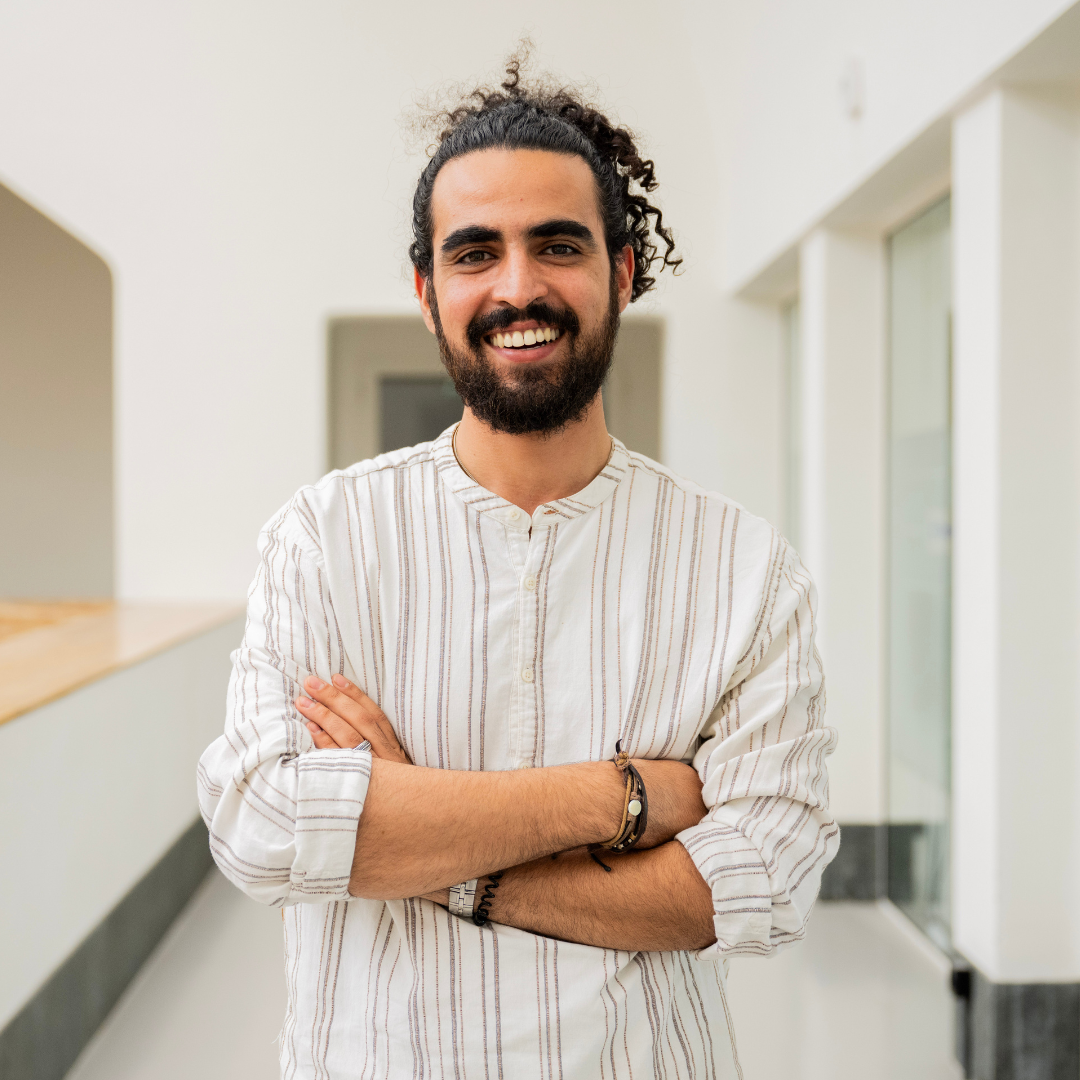
Khaled Tamimy is a mathematician, technologist, and founder of Social Technology Lab, working at the intersection of AI, data, and social impact. He leads an interdisciplinary team helping organizations navigate complexity, adopt innovation responsibly, and use technology for the public good. With a background in mathematics and computational physics, and nearly a decade of experience in strategic governance, policy, and social entrepreneurship, Khaled brings a distinctive “mathematician’s perspective” to technology and strategy. As a speaker, he translates complex ideas into practical, actionable insights, with a strong focus on ethical, inclusive, and real-world applications of AI.
Ajuna Soerjadi
Expertisecentrum Data-Ethiek
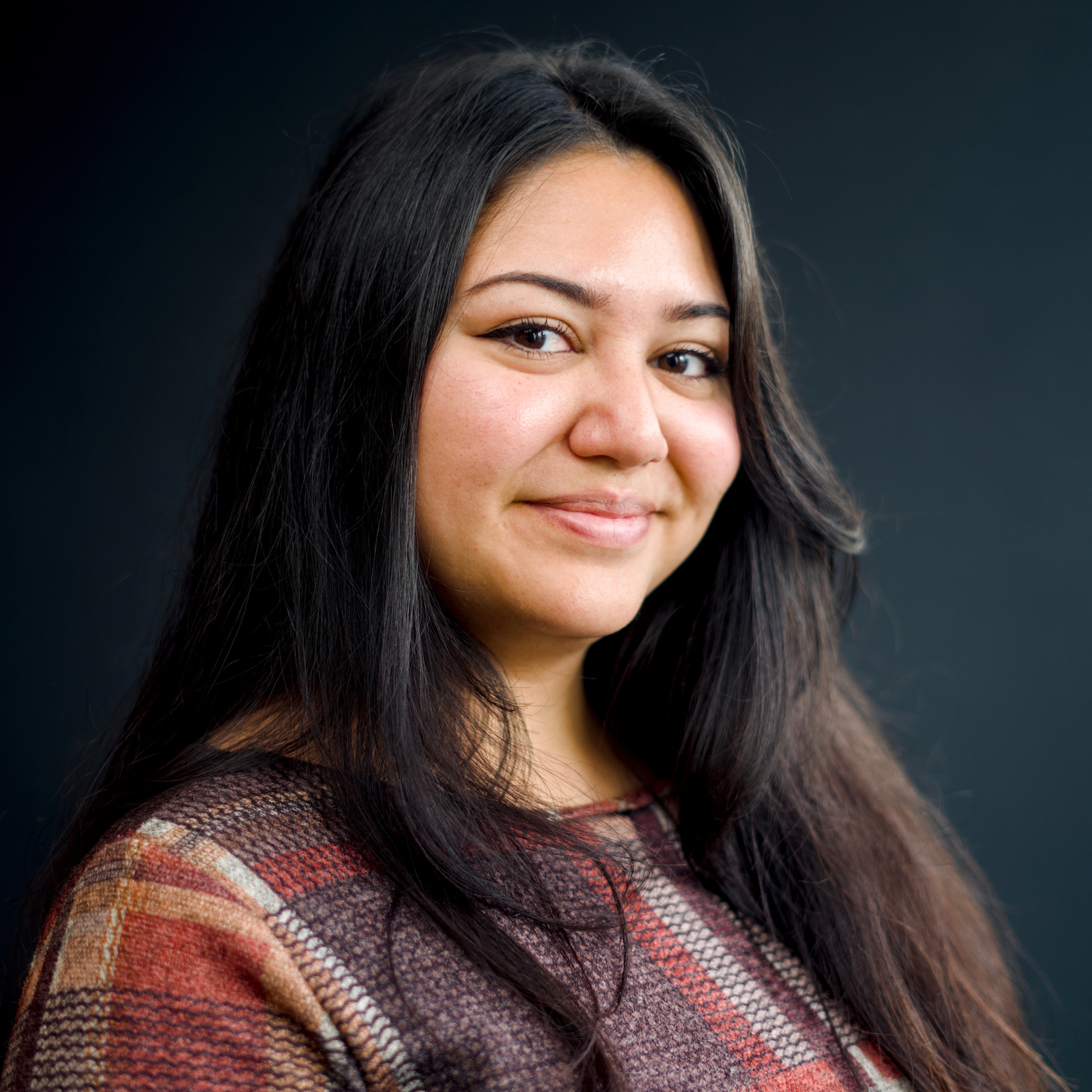
Ajuna Soerjadi studied philosophy and specialized in AI ethics. She is the founder of the Expertise Centre for Data Ethics, a training institute that helps organizations deploy AI responsibly. She has served as a researcher on Risk Profiling, Algorithms and Discrimination at the State Commission against Discrimination and Racism, and as a data protection officer. She was elected the first Young Thinker of the Fatherland, won the Responsible AI Award in 2024, and was named one of the 100 Brilliant Women in AI Ethics worldwide in 2025. She awakens her audience with stories that are as inspiring as they are confrontational, cutting through the AI hype so that we can build a future where everyone feels at home.
Anass Koudiss
Stichting PILP, Stichting Meld Islamofobie
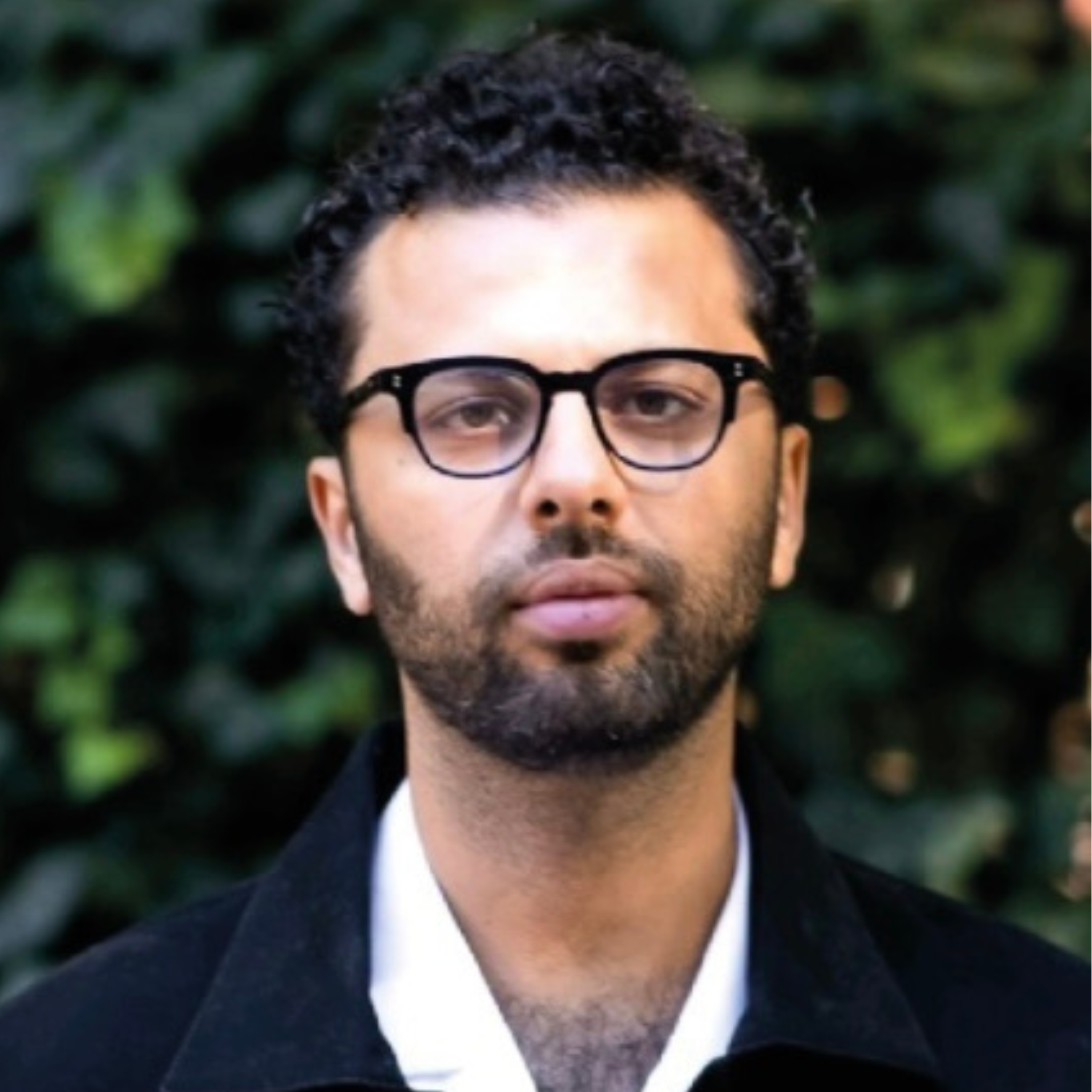
Anass Koudiss is the Director of Business and Operations at Stichting PILP, Executive Board Member at Stichting Meld Islamofobie and an AI ethics enthusiast. He left his more than 15 years career in Big Tech behind to work on things that truly matter. Thanks to his time in Big Tech he knows how they push AI to governments, media and the masses and how critical it is to distinguish between AI hype and harm.

Paul Lodder
Social Technology Lab

Rana Kuseyri
Inclusive AI Lab, Utrecht University
Rana Kuseyri is a Responsible AI researcher at the Inclusive AI Lab and a PhD candidate in the Department of Media and Culture Studies at Utrecht University. Her PhD research examines the everyday experiences of welfare recipients navigating an increasingly digital and automated welfare system in Rotterdam, the Netherlands. As a member of the Inclusive AI Lab, she is committed to developing inclusive and sustainable AI data, tools, services, and platforms. Rana previously studied Dutch and international law, specialising in anti-discrimination law and legal mobilization, and has worked with organisations such as Stichting Je Goed Recht, Stichting PILP, and Systemic Justice.